

AI, Mental Health Apps, and Therapy: Helpful Tool or Emotional Fast Food?
Mental health apps and AI tools are becoming more common. Some people use them for journaling, mood tracking, meditation, reminders, or support between therapy sessions. Used thoughtfully, these tools can be helpful.
But they are not the same as therapy.
The American Psychological Association has noted both increased interest in AI and ongoing concerns about privacy, accuracy, safety, bias, and overreliance. APA’s 2025 survey found that many psychologists have experimented with AI tools, while most remain concerned about risks such as data privacy and inappropriate use.
So where does that leave clients?
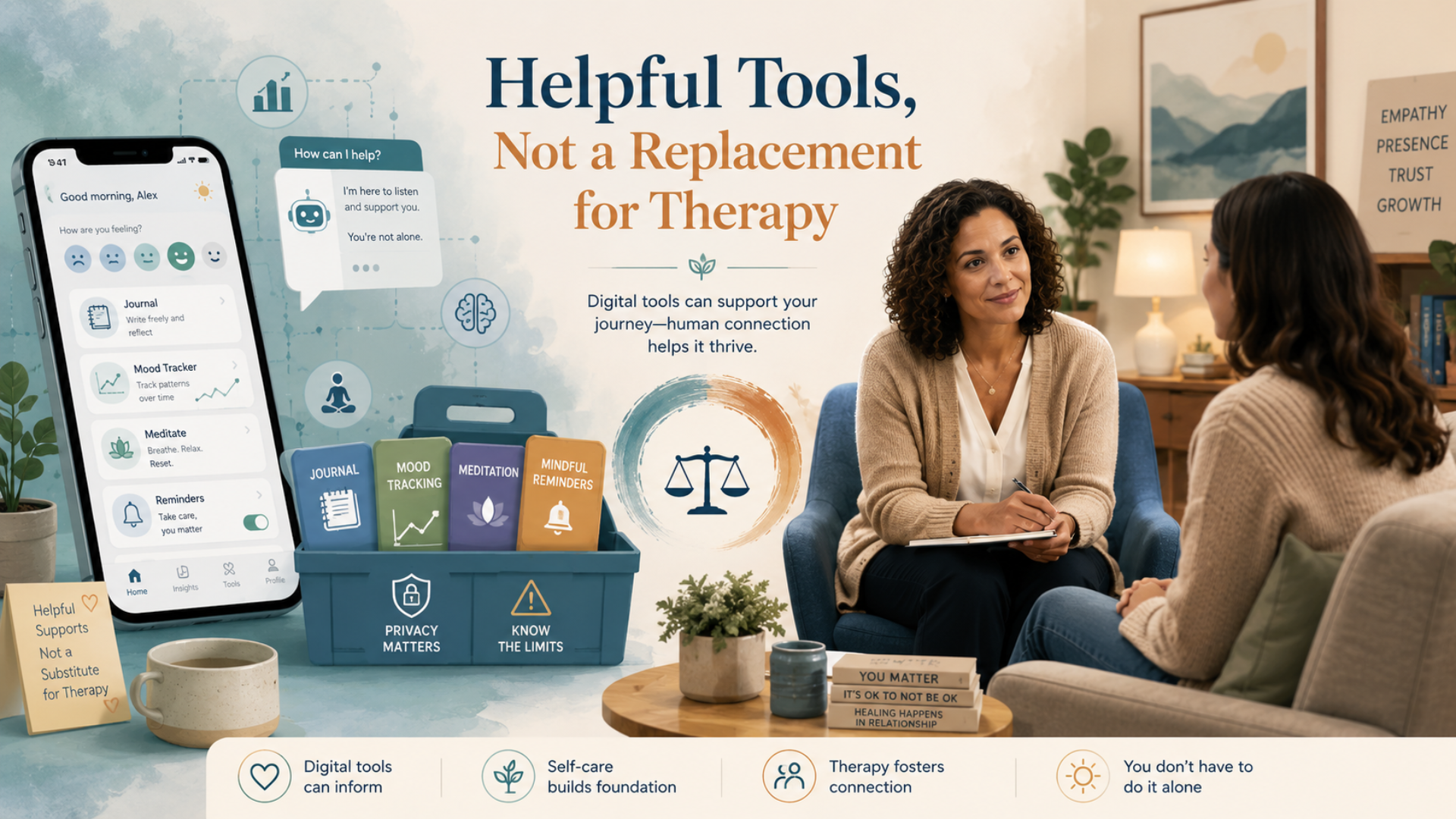
Digital tools may be useful for tracking patterns, practicing coping skills, or organizing thoughts before therapy. They can sometimes make care feel more accessible. But they cannot fully replace a trained therapist’s ability to understand context, relationship patterns, trauma history, nuance, culture, risk, grief, silence, contradiction, and the very human moment when someone says, “I’m fine,” but clearly is not fine.
Therapy is not just information. It’s relationship, reflection, safety, accountability, and care.
A helpful way to think about apps and AI is this: they can be tools in the mental health toolbox. But they should not be the whole toolbox, the contractor, and the building inspector.
If you use digital mental health tools, therapy can help you decide what is supportive, what is not, and what deserves more human attention.
Sources: APA has issued guidance on chatbots and wellness apps, emphasizing consumer safety and well-being. APA also reported growing AI experimentation among psychologists alongside concerns about privacy and risks. APA’s 2024 overview notes that AI is being used in mental health care for administrative tasks, workflow efficiency, and clinical decision support.