

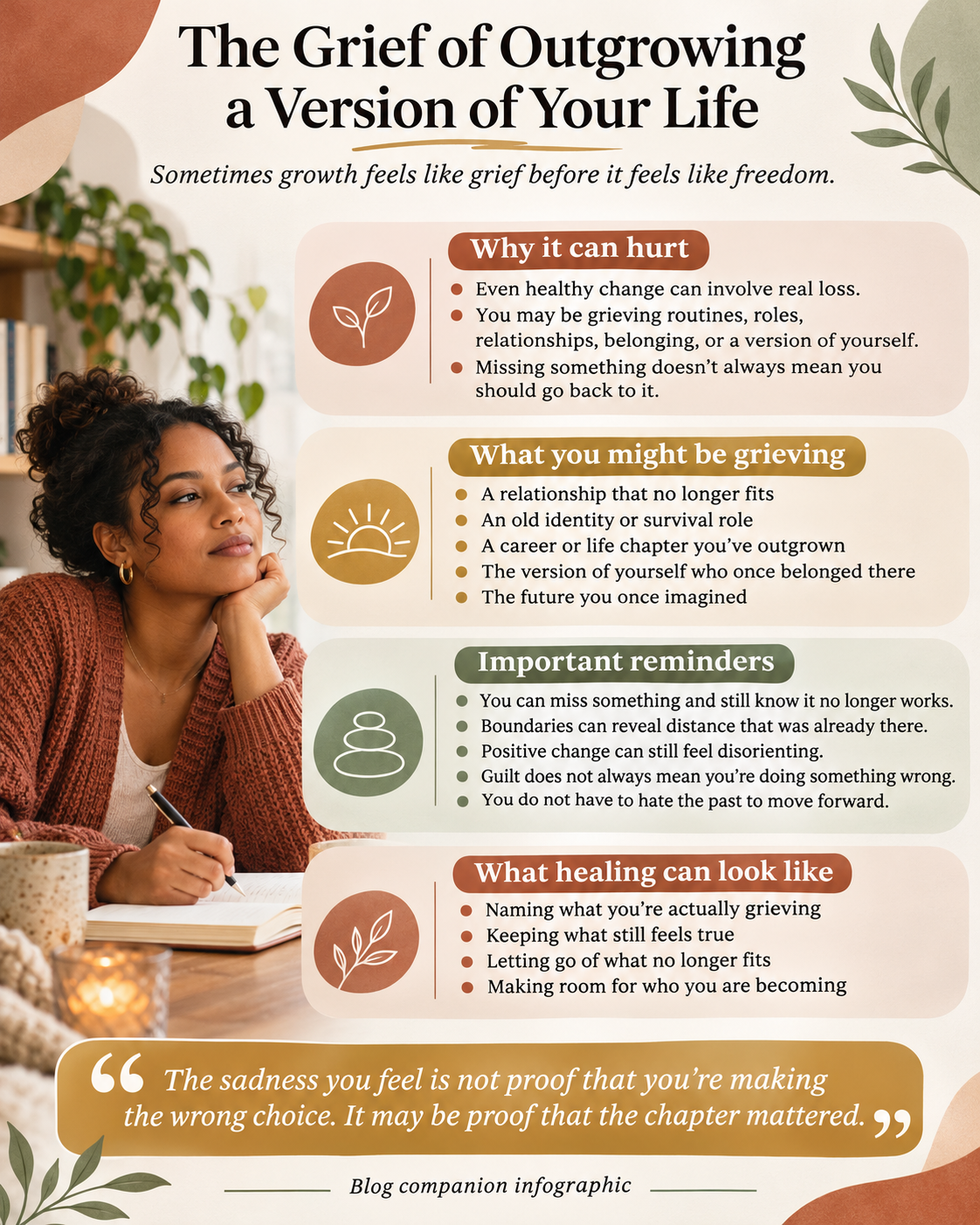
Not every loss happens because something was taken from you. Sometimes grief shows up because you changed. A relationship that once felt right no longer fits. A friendship starts to feel one-sided. A career you worked hard to build no longer feels meaningful. A family role becomes too heavy. A version of yourself that helped you survive no longer feels like the person you want to be.
Growth is often described as exciting, empowering, or freeing. And sometimes it is. But growth can also hurt. Sometimes growth feels like grief before it feels like freedom.

Why Change Can Feel Like Loss
We often think of grief as something that follows death, breakup, illness, or another obvious ending. But grief can also happen when something meaningful changes, even when that change is chosen, healthy, or necessary.
You may still be losing familiar routines, a sense of belonging, a role you once understood, relationships that depended on the old version of you, a future you once imagined, or an identity that helped you make sense of your life. That can create a confusing emotional experience. You may know you are moving in the right direction and still feel sad about what you are leaving behind. Both can be true.

You Can Miss Something You Know Wasn’t Good for You
One of the hardest things about growth is realizing that missing something does not necessarily mean you should go back to it. You can miss a relationship that hurt you. You can miss a family role that exhausted you. You can miss a workplace that was unhealthy. You can miss the familiarity of a life that no longer worked.
Familiarity can feel safe simply because it is known. Leaving it can create grief even when staying would have cost you more. That does not mean you made the wrong choice. It means the choice mattered.
Outgrowing Relationships Can Be Painful
Sometimes personal growth changes the way you relate to other people. You may start setting boundaries. You may stop accepting behavior you once tolerated. You may become less available for dynamics that depended on you over-functioning, rescuing, fixing, or staying silent. And not everyone will be comfortable with that.
Some relationships grow with us. Others do not. That can be painful, especially when the relationship has history. You may grieve who you were together, what you hoped the relationship would become, the version of yourself that belonged there, or the realization that love and history are not always enough to make a relationship healthy.
Outgrowing someone does not mean the relationship never mattered. It means the relationship may no longer fit the person you are becoming.

Boundaries Can Create Their Own Kind of Grief
Setting boundaries is often framed as empowering, but boundaries can also expose painful truths. You may discover that someone only respects you when you are easy to access. You may realize a relationship depended on you saying yes. You may learn that someone prefers the version of you who never pushed back.
That realization can hurt. Boundaries do not always create distance. Sometimes they reveal distance that was already there. And that can be something to grieve.
You May Miss the Person You Used to Be
Growth can also bring grief around identity. Maybe you miss the version of yourself who trusted more easily. Maybe you miss being more spontaneous. Maybe you miss the person you were before trauma changed the way you move through the world. Maybe you miss the identity tied to a career, marriage, family role, or physical ability.
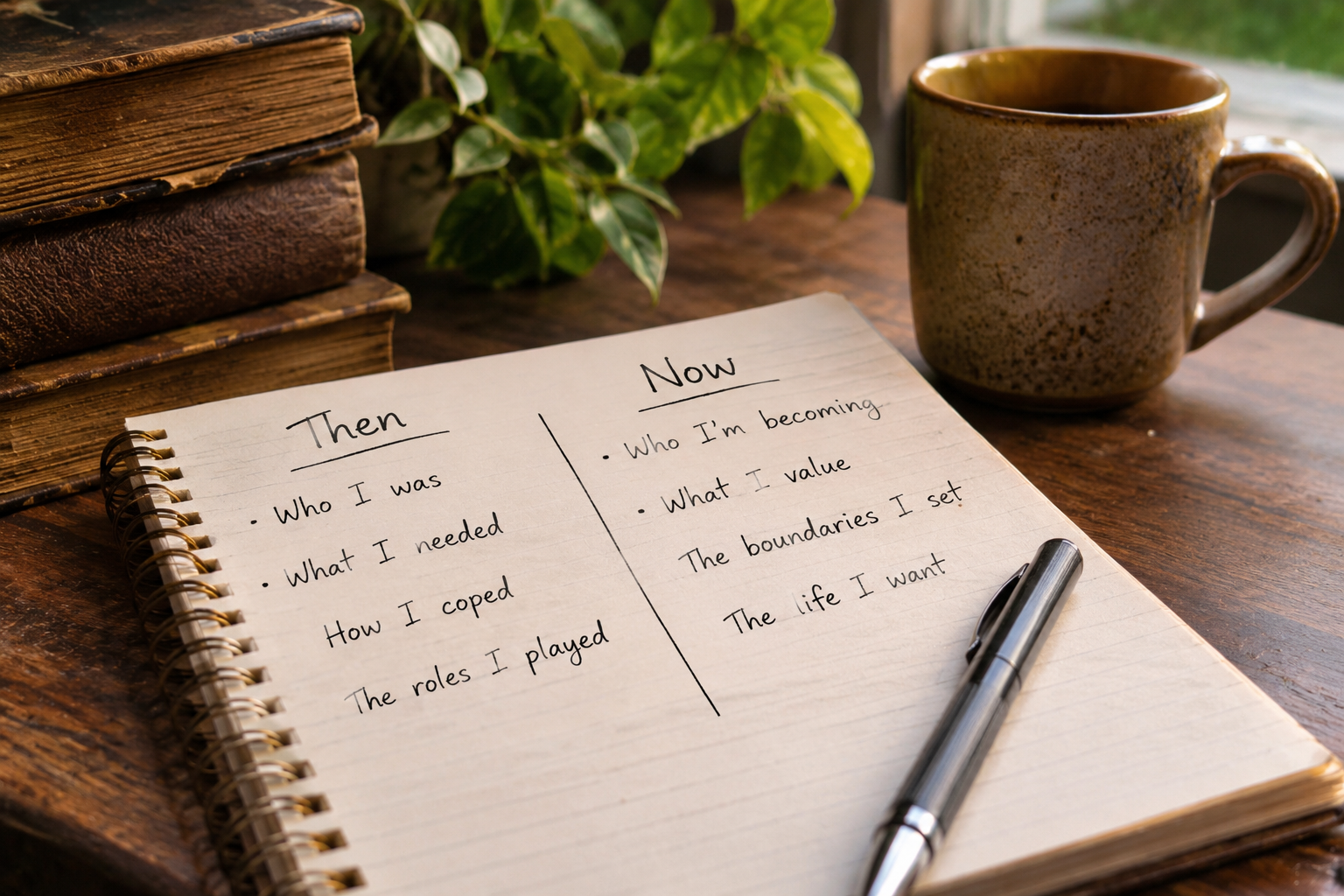
Healing does not always mean returning to who you were before. Sometimes healing means building a relationship with who you are now. That can include mourning the person you used to be while still making room for the person you are becoming.
Positive Change Can Still Feel Disorienting
People often assume positive changes should feel entirely good. A new job. Leaving a harmful relationship. Moving somewhere new. Becoming more independent. Finishing treatment. Setting boundaries. Starting over.
But major change can disrupt your sense of identity and belonging. You may find yourself wondering why you are sad if this is what you wanted, why you miss something you know you needed to leave, or why moving forward feels so uncomfortable.
Change asks you to release what is familiar before the new life fully feels like yours. There is often an in-between period where you are no longer who you were, but you do not yet feel settled into who you are becoming. That space can feel lonely.
Guilt Often Shows Up During Growth
Growth can bring guilt, especially when other people are affected by your choices. You may feel guilty for wanting more, wanting something different, saying no, leaving, choosing yourself, becoming less available, changing your mind, or growing away from people you still care about.
Guilt does not always mean you have done something wrong. Sometimes guilt appears because you are doing something unfamiliar, especially if you were taught that your value came from keeping other people comfortable.
You Do Not Have to Hate the Past to Move Forward
Growth does not require you to reject everything that came before. You can appreciate who you were. You can honor what a relationship meant. You can recognize that a role helped you survive. You can be grateful for a chapter and still be ready for it to end.
The past does not have to become meaningless simply because you are moving forward. You are allowed to say, “That mattered to me, and it no longer fits.”
What Healing Can Look Like
Healing during a major life transition may involve asking yourself what you are actually grieving, what this version of your life gave you, what it cost you, what you want to carry forward, and what you are ready to leave behind. It may also involve exploring which parts of yourself still feel true and which parts are beginning to change.
There may not be immediate answers. That is okay. Growth is not always a clean transformation. Sometimes it is slow, messy, uncertain, and tender.

You Are Allowed to Grieve What You Are Choosing to Leave
You do not have to wait for something terrible to happen before you are allowed to grieve. You can grieve an ending you initiated. You can grieve a relationship you know needed to end. You can grieve an identity you consciously chose to outgrow. You can grieve the life you are leaving while still wanting the life ahead of you.
Those feelings can coexist.
At Prism Psychotherapy, we believe growth does not have to look fearless to be real. Sometimes moving forward means carrying grief with you for a while. Sometimes becoming more yourself requires letting go of a life that once made sense.
And sometimes the sadness you feel is not proof that you are making the wrong choice.
It is proof that the chapter mattered.
