

The holidays are supposed to be joyful.
At least, that is what we are told.
There are lights, gatherings, traditions, family meals, music, decorations, and an endless stream of messages about togetherness and celebration.
But for someone who is grieving, the holidays can feel very different.
Sometimes grief is present all year and the holidays simply make it louder.
A familiar song can bring back a memory.
An empty chair can feel impossible to ignore.
A family tradition may no longer feel the same.
A gathering may highlight an estrangement.
A celebration may bring attention to the future you thought you would have by now.
The holidays do not create grief.
They often turn up the volume on what was already there.

Grief During the Holidays Is Not Just About Death
Holiday grief can happen after someone dies.
But it can also show up after many other kinds of loss.
You may be grieving:
A divorce or breakup
Estrangement from family
Infertility or pregnancy loss
A change in health or physical ability
A friendship that ended
A career change or job loss
A loved one affected by dementia, addiction, or mental illness
A family structure that no longer looks the way it once did
A relationship that remains complicated or unresolved
A version of yourself that existed before something changed
The holidays tend to bring expectations.
Who should be at the table.
What traditions should continue.
What your family is supposed to look like.
How happy you are supposed to feel.
That can make living losses feel especially sharp.
Traditions Can Hold Memory
Traditions are powerful because they connect the present to the past.
The same meal.
The same decorations.
The same songs.
The same route to someone’s house.
The same holiday movie.
The same joke someone always told.
When a meaningful person or relationship is gone or changed, traditions may suddenly become reminders of what is missing.
Sometimes the pain is obvious.
Other times it catches you by surprise.
You may feel completely fine decorating the house and then find yourself crying over an ornament.
You may feel steady all week and then fall apart in the grocery store because you see a food someone loved.
Grief can be unpredictable that way.
A difficult moment does not mean you are going backward.
It means something meaningful was touched.

Family Gatherings Can Make Grief More Complicated
The holidays are often portrayed as a time when families come together.
But not every family relationship feels safe, close, or uncomplicated.
For people experiencing estrangement, divorce, family conflict, or complicated grief, gatherings can create their own kind of stress.
You may be deciding whether to attend.
You may be wondering how long you can stay.
You may be preparing for uncomfortable questions.
You may be grieving someone who will be in the room but with whom your relationship has fundamentally changed.
You may be grieving someone who is physically present but emotionally unavailable.
You may be spending the holiday apart from people you once expected to share it with.
That grief is real too.
You Are Allowed to Have Boundaries
Grieving people are often expected to manage everyone else’s feelings.
You may hear:
“Come on. It will be good for you.”
“Everyone wants to see you.”
“You cannot skip Christmas.”
“You have to keep the tradition going.”
But you are allowed to decide what you can handle.
You are allowed to:
Say no.
Leave early.
Drive yourself so you can leave when you need to.
Skip a tradition.
Change a tradition.
Avoid a conversation.
Spend the holiday somewhere else.
Spend part of the day alone.
Ask someone you trust to stay close.
Protecting your emotional capacity is not rude.
Sometimes it is necessary.
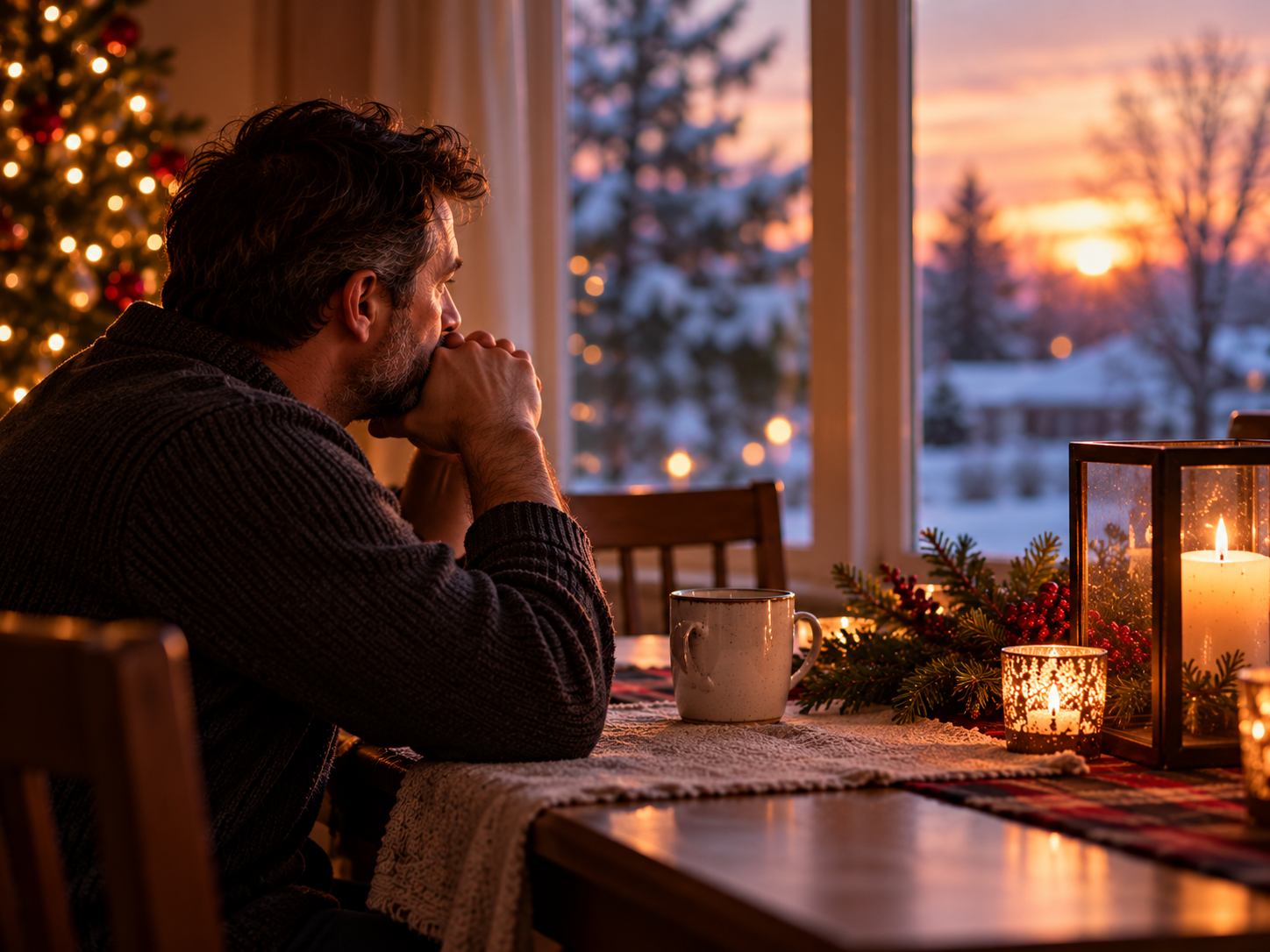
You Do Not Have to Perform Happiness
Holiday culture can create pressure to look cheerful even when you are hurting.
That pressure can be exhausting.
You may feel like you need to smile for photos.
Laugh at the right moments.
Participate in every activity.
Pretend the season feels magical.
Grief does not disappear because the calendar says December.
You can appreciate something beautiful and still feel sad.
You can laugh and still miss someone.
You can enjoy part of the holiday and hate another part.
You can feel gratitude and grief at the same time.
Those feelings do not cancel each other out.
New Traditions Do Not Replace Old Ones
People sometimes suggest creating new traditions after a loss.
That can be helpful.
But new traditions do not have to erase what came before.
You might:
Light a candle for someone you miss.
Cook one of their recipes.
Tell stories about them.
Play their favorite music.
Visit a meaningful place.
Donate to a cause they cared about.
Keep one old tradition and change another.
Create something completely new.
There is no correct way to honor what mattered.
A new tradition is not a replacement.
It can simply be another way of carrying connection forward.

Sometimes the Hardest Part Is Anticipation
For many people, the anxiety before the holiday is worse than the holiday itself.
You may spend weeks thinking:
How will I get through this?
What if I cry?
What if everyone asks questions?
What if nobody mentions the person I miss?
What if someone does?
What if I want to leave?
That anticipatory grief can take a lot of energy.
Planning ahead can help.
Consider asking yourself:
What part of the holiday feels hardest?
What would make the day more manageable?
Who feels safe?
Where can I take a break?
What am I willing to skip?
What do I need people around me to know?
A plan will not remove grief.
But it can reduce the pressure to make decisions while already overwhelmed.
What Support Can Look Like
If someone you care about is grieving during the holidays, you do not need perfect words.
You do not need to cheer them up.
You do not need to convince them to participate.
You can simply make space.
Try saying:
“I know this season may be hard.”
“You do not have to pretend with me.”
“If you need to leave early, I understand.”
“I was thinking about them too.”
“Would you like to talk about it, or would you rather have a distraction?”
Support is not about fixing grief.
It is about helping someone feel less alone inside it.

You Are Allowed to Do the Holidays Differently
You do not owe anyone a picture-perfect holiday.
You do not need to recreate the past.
You do not need to prove that you are healing.
You do not need to choose between grief and joy.
Both can exist.
The holidays may be tender.
They may be painful.
They may also contain moments of warmth, connection, laughter, or peace.
Healing does not require choosing one experience over the other.
Sometimes it means allowing the whole thing to be true.
At Prism Psychotherapy, we believe grief does not need to disappear before meaningful moments are possible.
You are allowed to miss what was.
You are allowed to protect yourself.
You are allowed to create something new.
And you are allowed to move through the season in the way that makes the most sense for you.
