

Some losses are immediately understood.
A death happens, and people know what to do.
They send flowers. They attend services. They check in. They expect you to be hurting.
But some losses do not receive that same recognition.
You may be grieving deeply while the people around you barely acknowledge that anything happened.
That experience is often described as disenfranchised grief.
Disenfranchised grief is grief that is not openly acknowledged, socially recognized, or adequately supported, especially when a loss is misunderstood, minimized, stigmatized, or invalidated.
And when grief is not recognized, it can become even harder to carry.
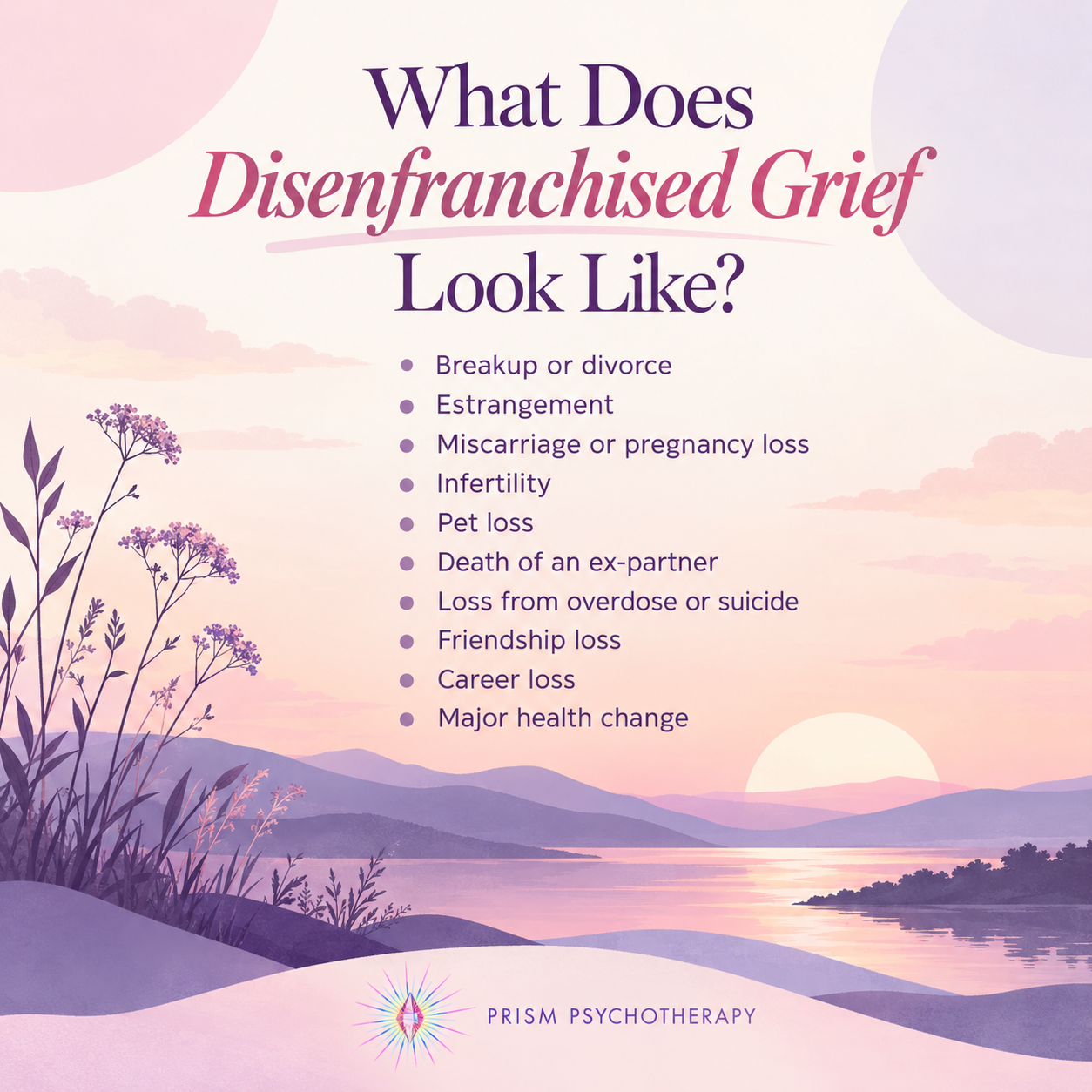
What Does Disenfranchised Grief Look Like?
Disenfranchised grief can happen when the loss itself is not socially recognized.
It can also happen when the relationship is not recognized, when the griever is not recognized, or when the circumstances surrounding the loss carry stigma.
That might include grief after:
A breakup or divorce
Estrangement
Miscarriage or pregnancy loss
Infertility
Pet loss
The death of an ex-partner
The death of someone from overdose or suicide
The loss of a friendship
The loss of a career
A major health change
A relationship that was private, complicated, or not accepted by others
Disarticulated grief is showing how grief can be shaped by society, significant others, internalized dialogue, systemic oppression, and injustice.
That matters because grief does not happen in a vacuum.
How others respond to your loss can affect how safe it feels to express it.
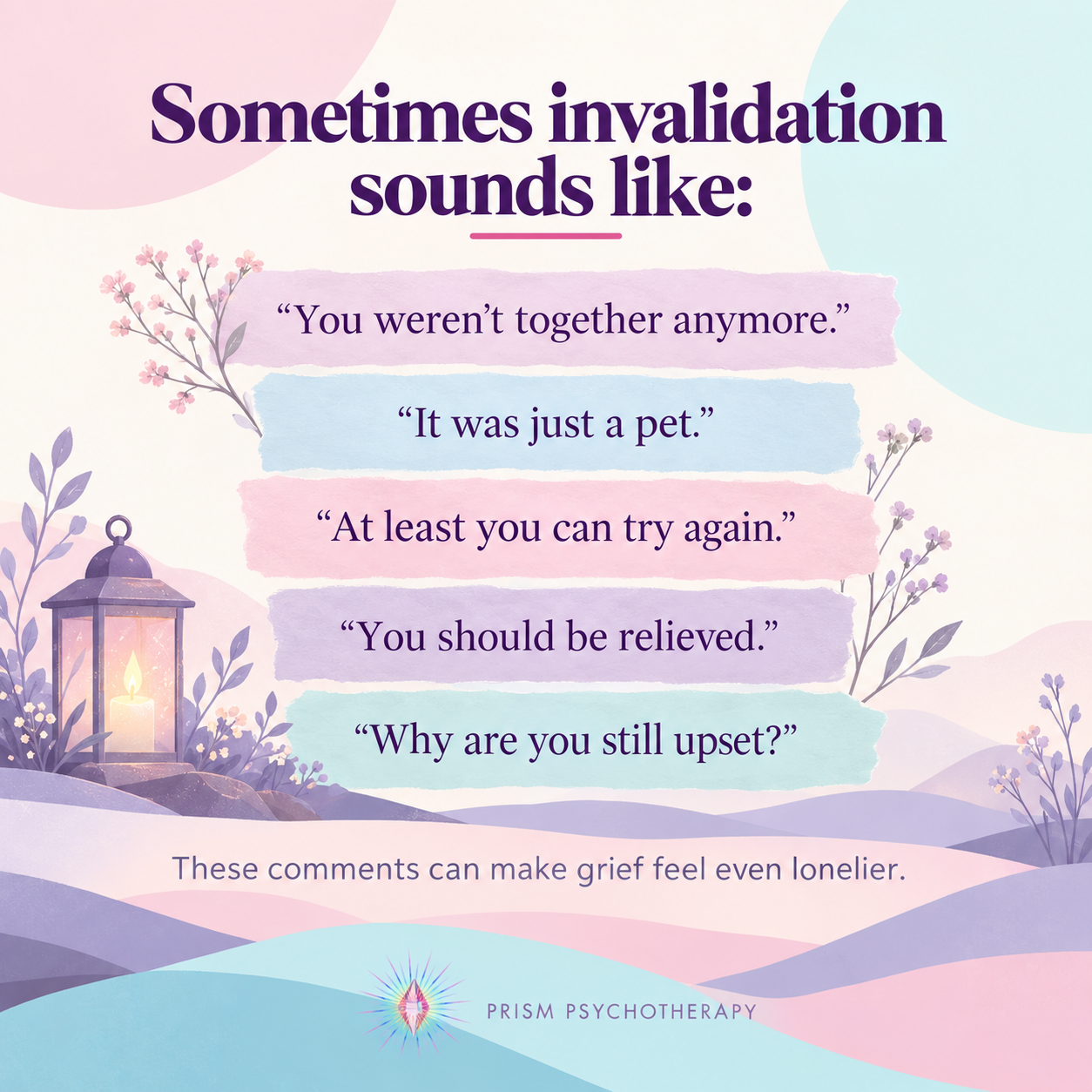
“You Shouldn’t Be This Upset”
Sometimes invalidation is obvious.
Other times it is subtle.
You may hear:
“You weren’t together anymore.”
“It was just a pet.”
“At least you can try again.”
“You knew they were sick.”
“You didn’t even see them that often.”
“You should be relieved.”
“Why are you still upset?”
These comments may be intended to comfort.
But they can also communicate something painful:
Your grief is too much.
Your loss does not count.
You should be over this by now.
When that message is repeated often enough, some people begin to silence themselves.
They stop talking about the loss.
They downplay their pain.
They apologize for grieving.
They tell themselves they should not feel the way they do.
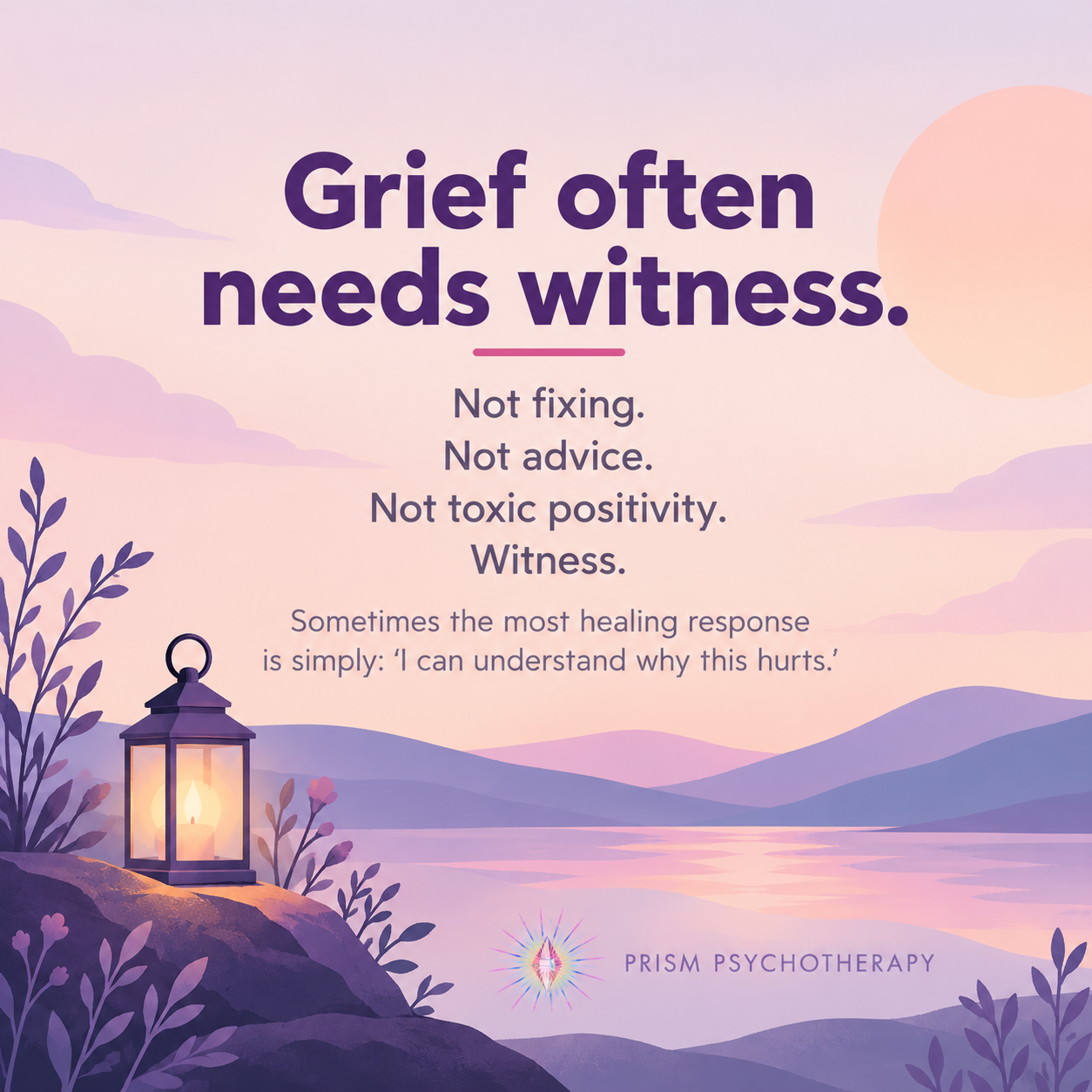
Grief Can Become Isolating When No One Wants to Hear About It
The presentation asks an important question:
How does someone heal if no one wants to listen?
That question gets at the heart of disenfranchised grief.
Grief often needs witness.
Not fixing.
Not advice.
Not someone rushing to point out the positive.
Witness.
Being present with grief is important and taking a nonjudgmental, non-pathologizing, open, curious, compassionate stance is critical.
Sometimes the most healing response is simply:
“I can understand why this hurts.”

You Do Not Have to Prove That Your Loss Was Important
Grief is not a competition.
There is no ranking system that determines which losses are painful enough to deserve support.
One person may be devastated by a breakup.
Another may feel profound grief after losing a job.
Someone else may be struggling after the death of a person with whom they had a complicated or painful relationship.
The meaning of the loss matters.
Healing support requires understanding the unique meaning and context of each loss story.
Two people can experience similar events and respond very differently.
That does not make either response wrong.
Complicated Relationships Can Create Complicated Grief
Some of the most painful grief happens after relationships that were difficult.
You may miss someone and still feel angry with them.
You may feel relieved and devastated.
You may grieve what happened between you.
You may grieve what never happened.
You may grieve the fact that there is now no possibility of repair.
These emotions can feel contradictory.
But grief is often full of contradictions.
You do not have to simplify the relationship in order to grieve it.
Support Should Make Room for the Whole Story
A meaningful grief response does not begin with:
“Why are you still upset?”
It begins with curiosity.
What did this person, relationship, role, or future mean to you?
What changed?
What are you missing?
What are you angry about?
What never got resolved?
What are you carrying alone?
Grief work ai naming grief, exploring nuanced meaning, and exploring shattered beliefs and identities.
That means the goal is not to decide whether your grief is justified.
The goal is to understand it.
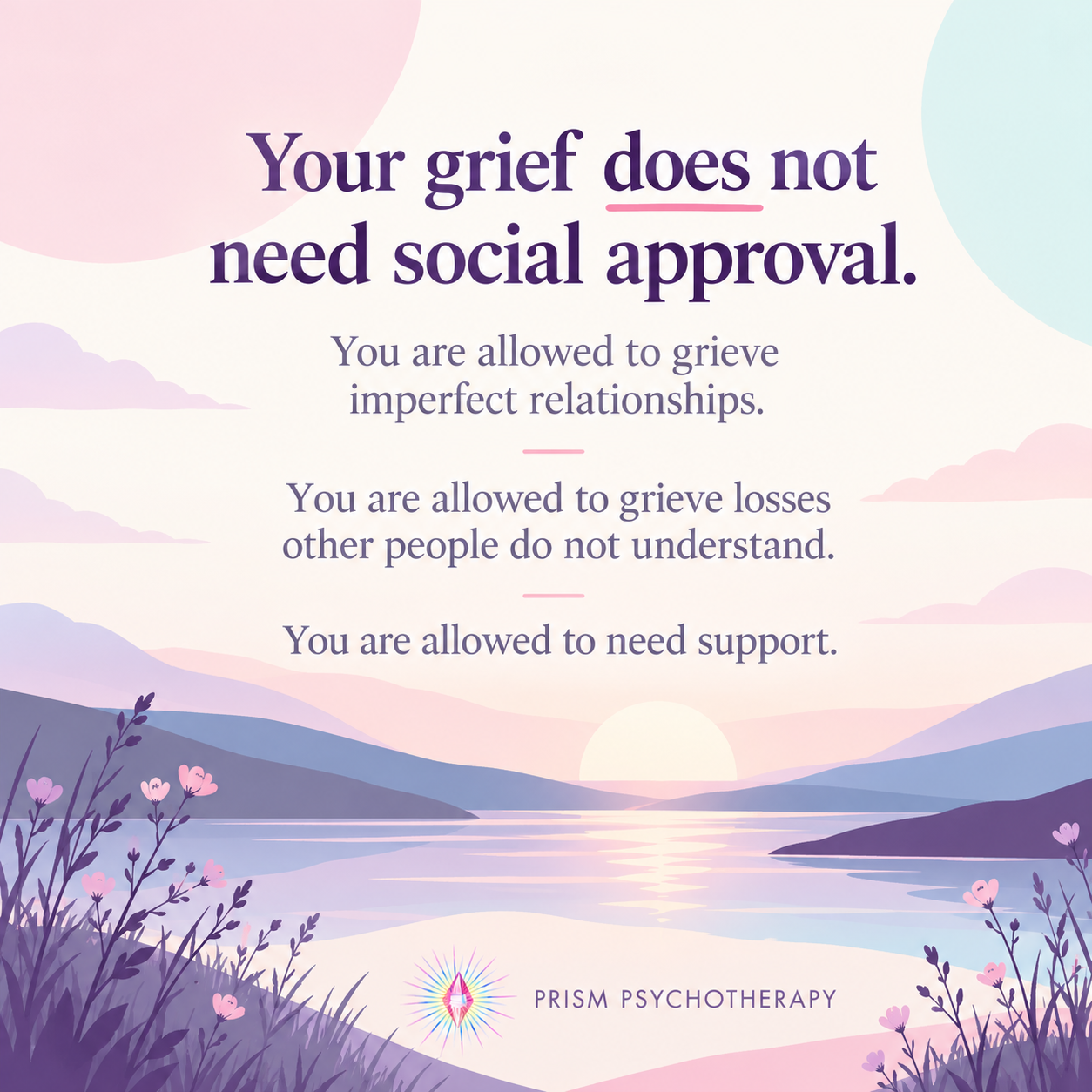
Your Grief Does Not Need Social Approval
If other people have minimized your loss, you may have learned to minimize it too.
But you can acknowledge what mattered.
You are allowed to be affected by what happened.
You are allowed to grieve imperfect relationships.
You are allowed to grieve losses that other people do not understand.
You are allowed to need support.
At Prism Psychotherapy, grief does not have to fit a socially approved script to be taken seriously.
Sometimes healing begins when someone finally says:
You do not have to convince anyone that this hurt.
