

The Rise of Trauma-Informed Therapy: What It Means and Why It Matters
“Trauma-informed” has become a common phrase in mental health care, but it is more than a buzzword. At its core, trauma-informed therapy asks a different question.
Instead of asking, “What is wrong with you?” it asks, “What happened to you, and how did you learn to survive?”
This shift matters.
Trauma-informed therapy recognizes that painful experiences can affect the nervous system, relationships, trust, identity, boundaries, and the way a person responds to stress. It also recognizes that people may carry trauma from abuse, neglect, discrimination, violence, medical experiences, grief, family instability, systemic harm, or repeated emotional invalidation.
A trauma-informed therapist works to create safety, choice, collaboration, trust, and empowerment. That might mean moving at a pace that feels manageable, explaining the therapy process clearly, checking in around consent, avoiding shame-based language, and helping clients understand their responses with compassion.
This approach can be especially important for LGBTQIA+ clients, people with marginalized identities, survivors of abuse, and anyone who has been harmed by systems that were supposed to help.
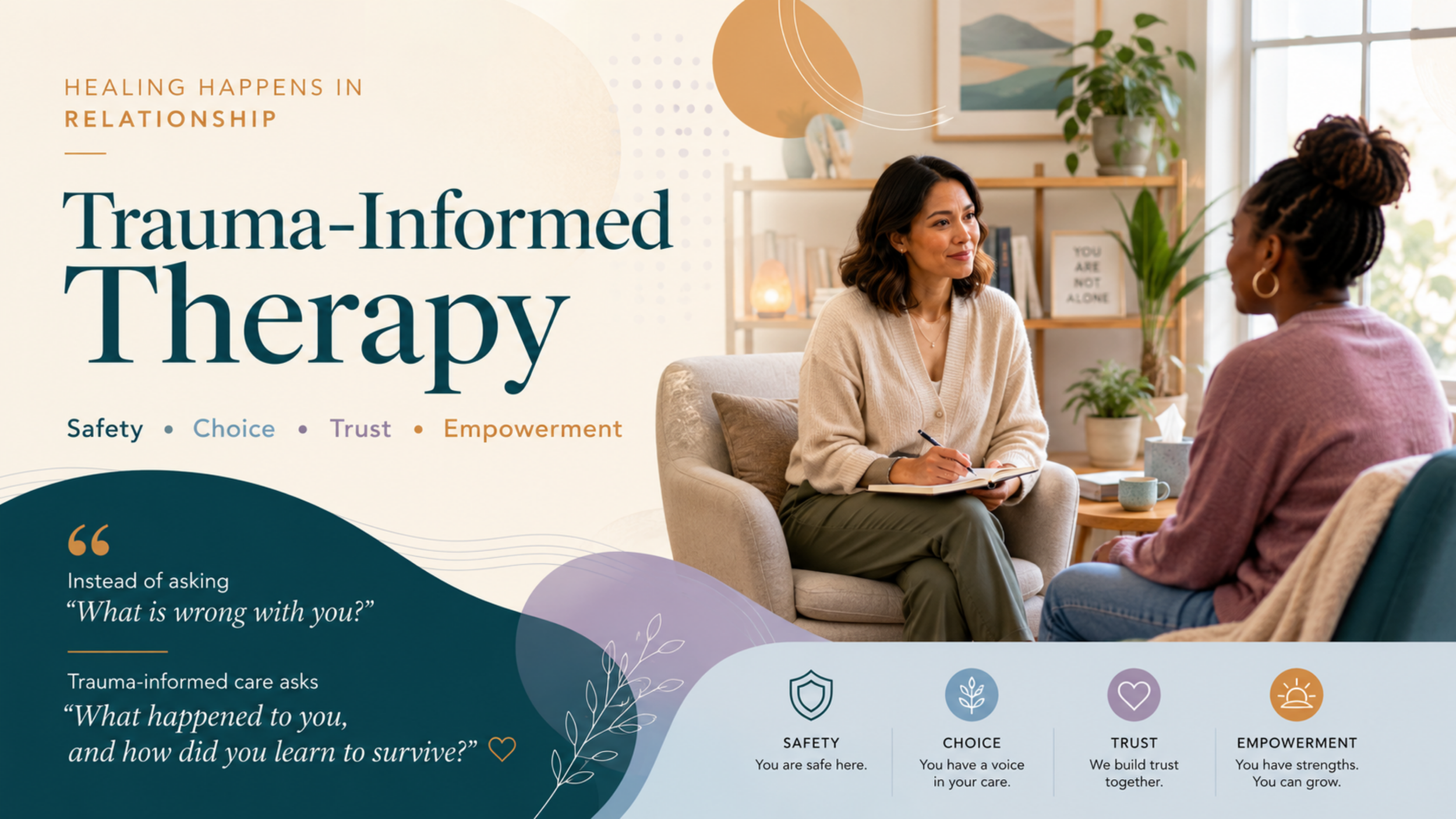
Trauma-informed care does not mean every session focuses on trauma. It means the therapist understands that past experiences may shape present-day reactions — and that healing requires respect, safety, and agency.
You are not “too sensitive.” Your nervous system may be doing exactly what it learned to do to protect you.
Therapy can help it learn that the present is different from the past.
Sources: Trauma-informed care emphasizes safety, transparency, and minimizing distress, including in transgender and gender-diverse health care settings. Fenway Health’s 2025 issue brief advocates for trauma-informed care as a systems-level approach for LGBTQ+ patients. The VA’s PTSD National Center also highlights the importance of safe, welcoming, affirming environments for LGBTQ+ clients in trauma treatment.